Put this on your toast tomorrow
DULKITTA®
Dulce de Leche · The golden spread
Milk and sugar, cooked for hours until it tastes
like toasted milk and brown sugar. Not caramel.
say it: dul·KEE·tah
It is not caramel.
We say this a lot.
Caramel is sugar, burnt on purpose. This is milk, cooked until it turns. Caramel is sharp and glassy and hits you at the front. This is soft and thick and a little salty at the end. If you have only ever had caramel, you are going to be annoyed at how long nobody told you.
Dulce de leche. DOOL·seh deh LEH·cheh.
Caramel
- Sugar and water
- Minutes, high heat
- Sharp, glassy, one note
- Goes on top of dessert
Dulce de leche
- Whole milk and sugar
- Hours, low heat
- Toasted milk, brown sugar, salt at the finish
- Is the dessert. Also breakfast
How it is made
Milk, sugar,
patience.
-
01
The milk goes in first
Whole milk from Paraguayan dairy country, cooked in a plant an hour south of Asunción, close enough to the farms that it does not sit around waiting.
-
02
Then somebody stirs
Milk and sugar over low heat, and somebody keeps stirring well past the point where it would be reasonable to stop.
-
03
You smell it before you see it
The milk darkens on its own. Nothing is added for color, because nothing needs to be.
-
04
Into the jar while warm
That last part is what keeps it silky instead of grainy. The plant is FSSC 22000 certified and already ships to the United States.
Start with bread.
Everything else on this page is a variation.
- Breakfast
- Coffee
- Desserts
- Baking
Five in the afternoon
Where we come from,
this is a meal.
Around five in the afternoon everything stops. Bread comes out, dulce de leche comes out, something cold to drink, usually tereré. It is called la merienda and there is no English word for it, so borrow ours. Start where we start: plain white bread, thick layer, no toasting. Then work your way down this list.
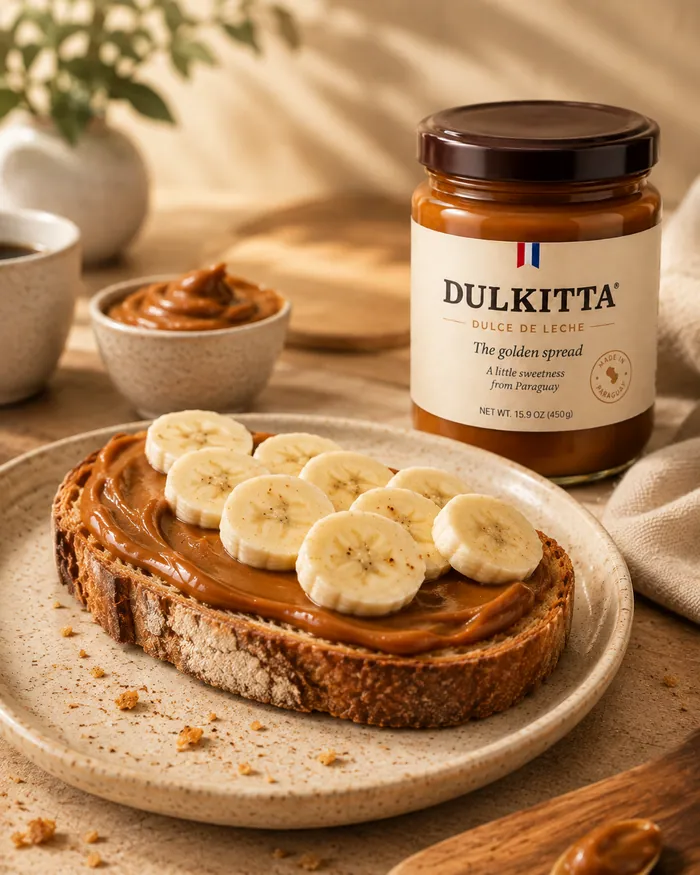 Toast, the way it's done down south
5 min
Toast, the way it's done down south
5 min
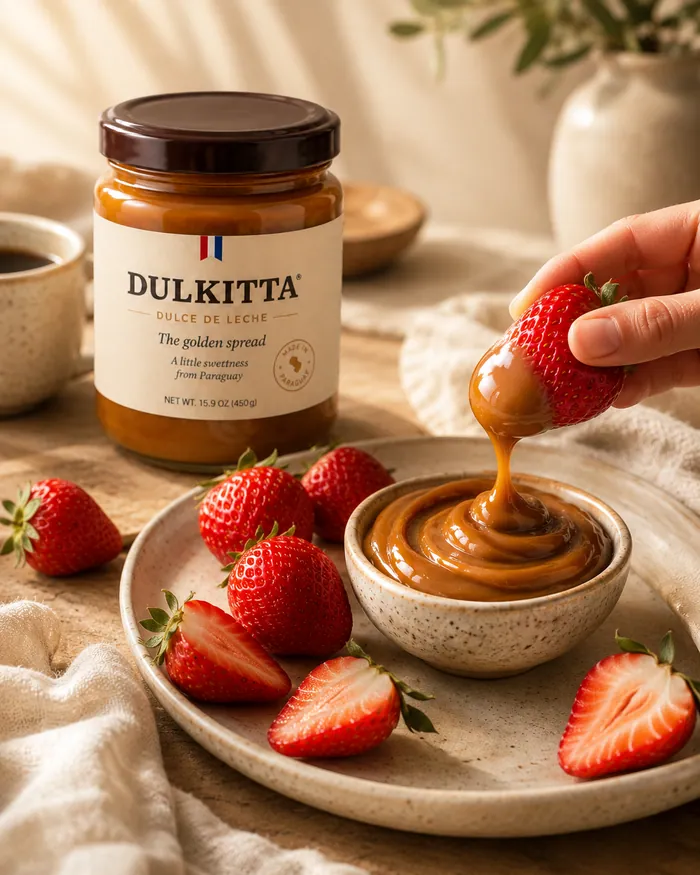 Strawberries, dipped
20 min
Strawberries, dipped
20 min
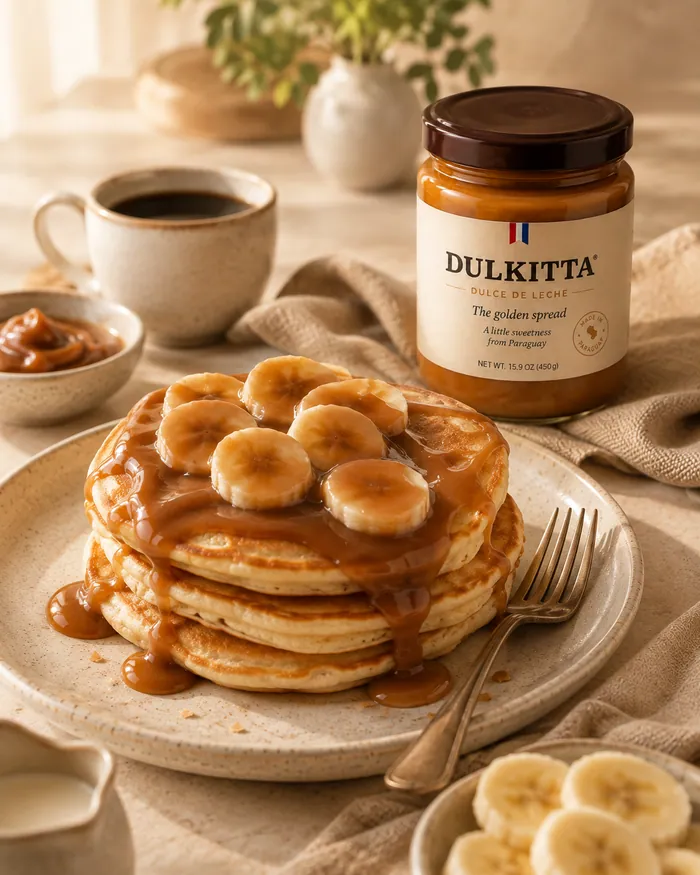 Pancakes that ruin syrup for you
No bake
Pancakes that ruin syrup for you
No bake
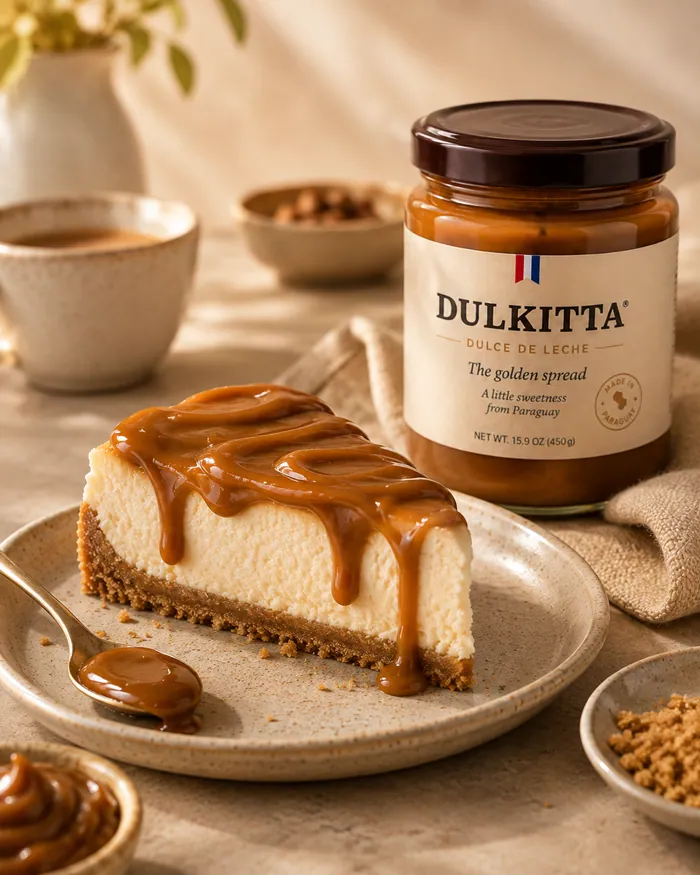 The cheesecake that needs no oven
If this is all new to you
Questions we get asked
at every dinner table.
What is dulce de leche?
What it is, how it is made, how it is eaten, and how to say it out loud without hesitating.
Read itIs it just caramel?
No. Different ingredient, different process, different taste. Here is the whole argument on one page.
Settle itWhat do I do with it?
Eight things, starting with bread and ending with the cookies South America runs on.
Get cooking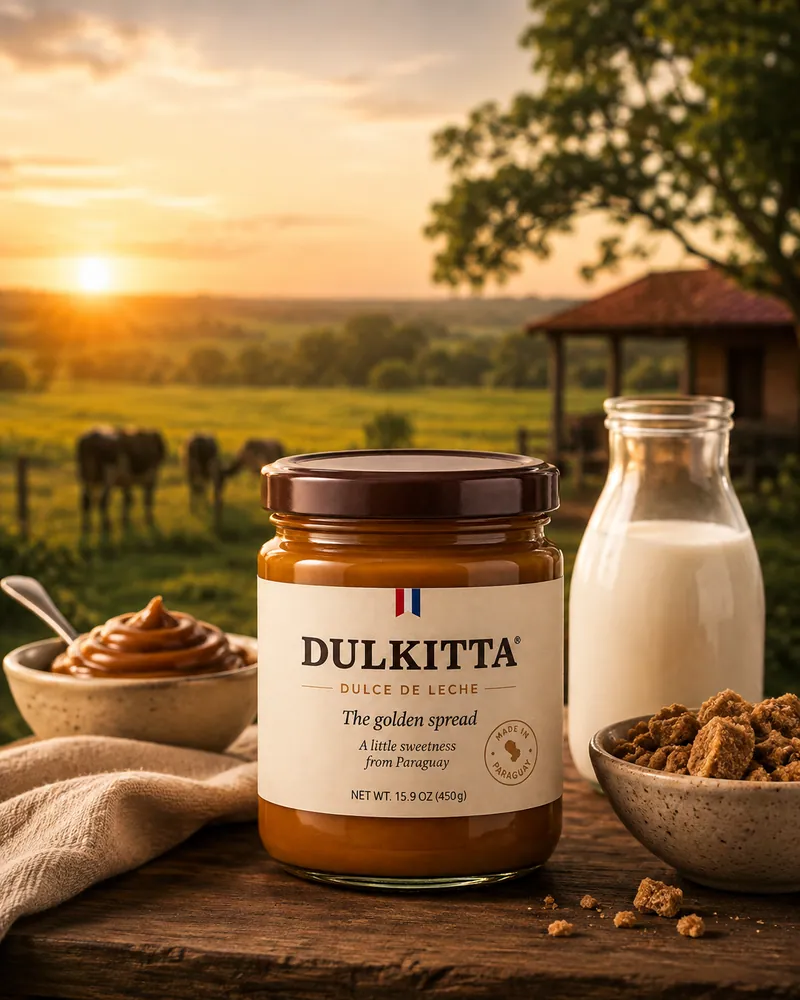
Made in Paraguay
The milk never
travels far.
Dulkitta is cooked at a dairy an hour south of Asunción, in a country where there are more cows than people and the milk reaches the plant the same day it leaves the farm. That is most of the recipe right there. Here dulce de leche is not a delicacy and it is not a gift. It is what is in the cupboard, and it has been for as long as anyone can remember.
Paraguay, by the way. Not Argentina. We do get that one a lot.
- Same dayfrom farm to plant
- FSSC 22000the dairy already ships to the U.S.
- Guaraníspoken here alongside Spanish
The jar
One jar. One recipe.
We are not going to
pretend otherwise.
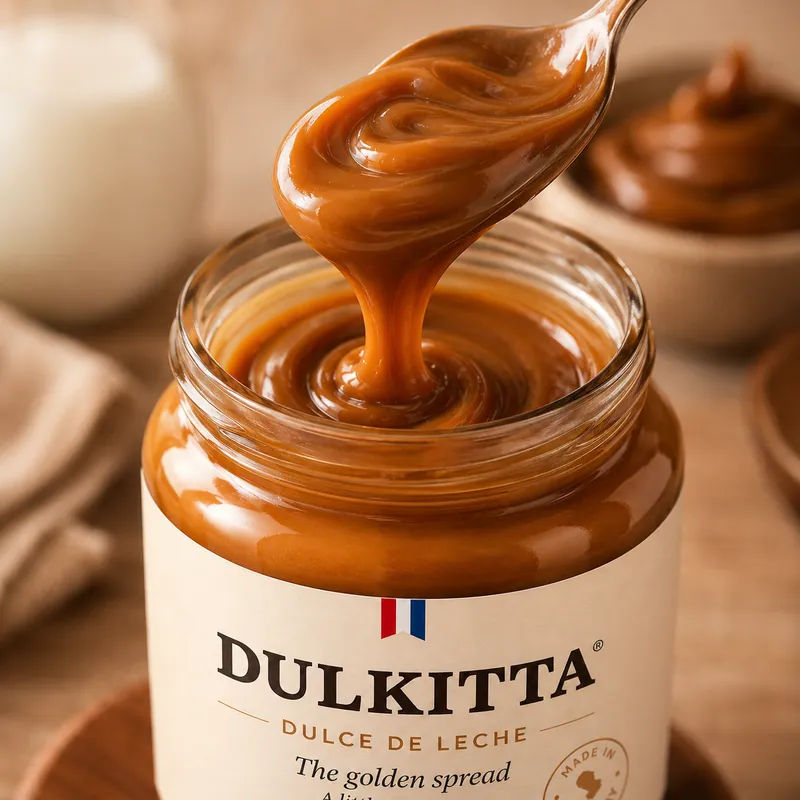
Whole milk, sugar, nothing added for color. Thick enough that the spoon leaves a trail, soft enough to spread without warming it first. When we have something else worth putting in a jar, you will hear it from us first.
- 15.9 oz450 g jar
- ~12servings per jar
- 5ingredients, all pronounceable
- 30 daysrefrigerated after opening
Ingredients: whole milk, sugar, glucose syrup, baking soda, natural vanilla. Contains: milk.
-
Made with
real milk - Slow-cooked
-
No artificial
flavors -
Gluten
free
There are no jars yet.
That is exactly why
we need your email.
We are a small team getting the first shipment into the United States, and that takes longer than anyone tells you. Leave your email and we will write once, when there is actually something to buy. No countdown. No eleven emails about our journey.
Run a shop, a bakery or a café? Write to us directly. We would rather talk than send a deck.